


A cat litter box tracker is a camera-based monitoring device that records your cat’s toileting habits (visit frequency, duration, stool shape and colour, and urine clump events) and compares them with your cat’s own baseline, so it can flag changes early. It does not diagnose.
Here’s how it works: (1) Records each litter box visit, (2) compares patterns against your cat’s personal baseline, which forms in about 7 days and is stable at about 30 days, (3) flags abnormalities such as unusual visit frequency or stool changes, (4) with a Care+ plan, sends app alerts for abnormal stool and data so you can call your vet sooner.
Check: Litter box health camera for cats
What Makes Litter Box Habits a Window Into Cat Health?
Litter box habits are an early window into health because changes in frequency or duration are often among the first signs of a urinary or digestive problem. Cats naturally hide pain (see this iCatCare guide), which makes these subtle shifts the main clues, especially in multi-cat homes or busy households where manual checks are inconsistent. Our guide to what your cat’s litter box can tell you covers the signs to watch for.
How Do AI Litter Box Cameras Track Visits, Frequency and Stool?
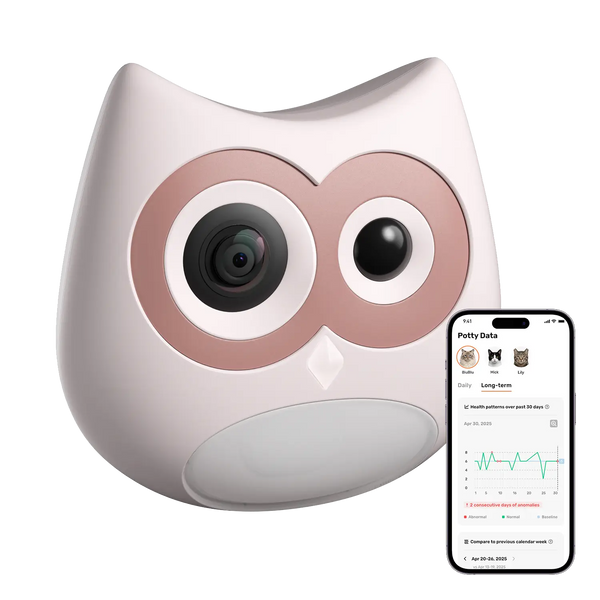
LitterLens uses a wake-up sensor and AI recognition to confirm that a cat is at the box, then timestamps each visit so the app can show visit count and duration. It analyzes stool images by shape (hard, soft or watery) and colour (black, red, grey, green, orange-yellow) and compares patterns with your cat’s baseline. LitterLens does not measure weight, so use a scale or your vet for that.

| Metric | Manual Observation | AI Litter Box Tracker |
|---|---|---|
| Visit Counting | Visits are easy to miss | Every detected visit logged with time and duration |
| Stool Analysis | Visual guessing | AI classification of shape/color |
| Multi-Cat Tracking | Hard to do in a shared box | Individual recognition (about 80% or better, lower above 5 cats) |
| Response Time | Delayed (hours/days) | App alerts for abnormal data with a Care+ plan |
| Timeline | Memory-based notes | Visit history in the app; Care+ keeps abnormal records for 12 months |
Which Health Changes Can AI Litter Tracking Flag Early?
AI litter tracking does not detect conditions. It flags changes that often go with them. Frequent visits or long stays in the box can accompany urinary problems, such as common cat UTI symptoms, bladder stones or blockages. Abnormal stool (soft, watery, discoloured) can go with digestive problems such as diarrhea in cats. Only a vet can tell which it is, so alerts give you a reason for an early vet consultation, not a diagnosis.
The camera does not see straining or posture, and it cannot detect kidney disease, dehydration, vomiting or parasites. For lower urinary tract signs, see the Cornell Feline Health Center guide to lower urinary tract disease.
How Does Multi-Cat Recognition Work, and Why Does It Matter?
Multi-cat recognition uses AI to identify individual cats by body shape and markings, maintaining separate health logs with about 80% or better accuracy (lower above 5 cats, and the app supports up to 10). It matters for attributing changes such as frequent visits to one cat, enabling targeted care in shared boxes and simplifying vet sharing. Our explainer on how multi-cat litter box identification works goes into more detail.
What Do the Free Plan and Care+ Include?
The free plan includes live view, recording, visit count and duration data, 72 hours of local storage and low-battery alerts. Care+ adds abnormal stool and data alerts and analysis, event video kept for 1 month, abnormal records kept for 12 months and a data dashboard. Check the product page for current plan pricing.
Can Early Detection Help With Vet Costs and Lifespan?
A litter box tracker cannot promise lower vet bills or a longer life. What it can do is show a change sooner, so you can call your vet sooner. A problem seen earlier is often simpler to treat than one that becomes an emergency, but outcomes and costs vary from cat to cat.

What Does LitterLens Offer for Litter Box Monitoring?
LitterLens focuses on visit and stool tracking. It has a 1080p camera with a white fill light for night use, IPX5 water resistance, a 5000 mAh battery that lasts about a month with typical use, and multi-cat identification. Core features are free, and abnormal stool and data alerts need Care+. Browse the cat health monitoring collection to see the options.
How Do You Get Started With a Cat Litter Box Tracker?
Attach LitterLens to a flat surface at the edge of a litter box larger than L size (over 50 x 38 cm) using the adhesive mount, or pick a clip or Gooseneck option from the LitterLens mounts and holders. Connect to 2.4GHz Wi-Fi through the SiiPet app and register your cats. The baseline forms in about 7 days and becomes stable at about 30 days.
Conclusion: A Tracker Helps You Notice Changes Sooner
A cat litter box tracker like SiiPet LitterLens turns subtle toileting changes into records you can act on. It logs visits, stool and urine clump events, and with Care+ it flags abnormal changes so you can call your vet earlier. With multi-cat support and app history, it suits busy or multi-pet homes. All insights are informational and do not replace a vet exam.
FAQs About Litter Box Trackers
Does a litter box tracker work with automatic/self-cleaning litter boxes?
No. LitterLens is not recommended for automatic or self-cleaning litter boxes. It works with open-top and covered boxes larger than L size, on a flat mounting surface.
What subscription cost should I expect?
The free plan includes live view, recording, visit count and duration, 72 hours of local storage and low-battery alerts. Abnormal stool and data alerts and analysis need Care+, and the price depends on how many devices you have. See the product page for current plans.
How accurate is the multi-cat recognition if my cats look similar?
Recognition is about 80% or better, and lookalike cats are harder to tell apart. Accuracy drops with more than 5 cats. Check the cat labels in the app during the first days.
Can I share litter box data with my veterinarian?
Yes. Show the visit timeline, stool snapshots and alerts in the SiiPet app to your vet. Your vet decides what the data means and which tests your cat needs.
What if I want to disable the camera for privacy?
Yes, you can. Privacy Mode turns the camera off whenever you choose.


