

The safest cat constipation home remedies add water and fiber to a mild case: more wet food, extra fresh water, and a small spoonful of plain canned pumpkin mixed into a meal. They suit a cat that is still eating, acting normally and passing small or hard stools. If your cat has passed no stool in 48 hours, strains with nothing coming out, vomits, or has blood in the stool, skip home care and call your vet. Ask your vet before giving any laxative, oil or supplement.
What Causes Cat Constipation and How to Spot It Early?
Cat constipation involves hard, dry stools, infrequent pooping (for example a cat not pooping for 2 days), straining, or small pellets. Common causes are dehydration, low-fiber diet, hairballs, obesity and age-related problems in senior cats. Cats hide discomfort, so watch for litter box avoidance, crying in the box, a reduced appetite or hiding. For the full list of causes and what a vet does about them, read our guide to why a cat can't poop.

What Are the Safest Home Remedies for Constipated Cats?
The safest options are plain canned pumpkin (not pie filling) for fiber, more wet food, and extra water from a fountain or several bowls. Some vets also allow a little olive oil mixed into food, but oil can cause problems if it is swallowed the wrong way, so ask first. Ask your vet how much of anything to give, because the right amount depends on your cat's size and health. Avoid human laxatives and excess feeding.
| Remedy | Why it may help | Caveat |
|---|---|---|
| Canned pumpkin | Adds fiber and moisture | Plain only, with no spices or sugar. Ask your vet how much |
| Wet food | Raises daily water intake | Switch gradually to avoid an upset stomach |
| Fresh water and fountains | Softer stool through better hydration | Offer several water spots around the home |
| Olive oil | May lubricate stool | Only if your vet agrees. Never syringe oil into the mouth |
| Milk | No benefit | Avoid: many cats are lactose intolerant |
| Human laxatives and aloe | None | Avoid: toxic to cats |
How to Help a Constipated Cat Immediately at Home?
For mild cat constipation relief, offer warm wet food or low-sodium chicken broth with no onion or garlic, and encourage play for gentle exercise. Brush your cat to reduce swallowed hair. A light clockwise tummy rub for a few minutes after a meal is fine if your cat enjoys it, but stop if your cat tenses, cries or pulls away.
Our guide to natural cat laxatives goes deeper on each option. Give any home care 24 hours at most. If no stool has passed by the 48-hour mark, call your vet.
What Can a Litter Box Camera Show About Constipation?
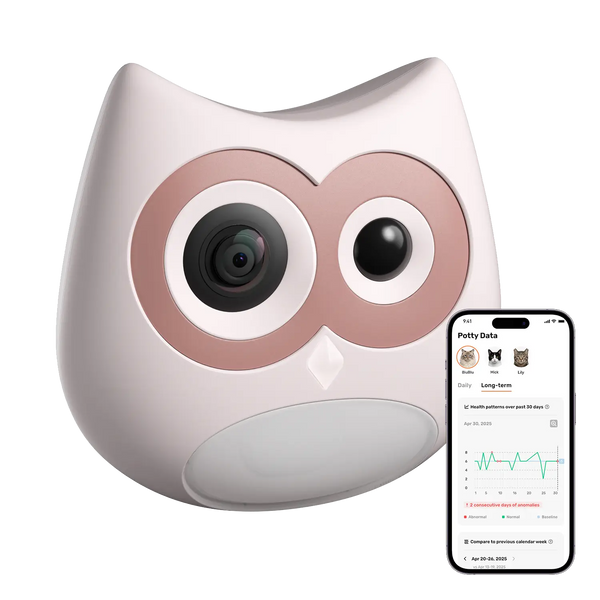
LitterLens mounts on the litter box and logs each cat's visit count and duration. It rates stool shape as hard, soft or watery and records stool colour. After about a week it has a baseline for each cat, and Care+ subscribers get alerts when stool or visit patterns drift from it, for example fewer visits or harder stool.
It does not diagnose constipation, and it does not see straining or posture. It gives you a dated record to share with your vet. See the cat health monitoring collection for current options.
When Do Constipation Patterns Require Vet Intervention?
See a vet if there is no poop for 48 hours, blood in the stool, vomiting, lethargy, or if home care does not help within a day or so. A male cat straining with nothing coming out may have a urinary blockage and needs a vet immediately, as described in emergency signs when a cat can't pee or poop. Persistent hard stools can point to dehydration, kidney disease, a blockage or a colon problem such as megacolon. The VCA guide to constipation in cats lists the same red flags.
Which Cat Stool Softeners and Natural Laxatives Work Best?
For mild cases, vets often start with fiber such as pumpkin, more moisture and sometimes a probiotic. For stubborn cases they may prescribe a stool softener or laxative, and the dose depends on your cat's weight and health, so it has to come from your vet.
Do not use aloe, mineral oil by mouth, human enemas or over-the-counter human laxatives. Track stool shape and colour before and after any change so you and your vet can see whether it is working. The International Cat Care advice on constipation covers when medication is needed, and the Cornell Feline Health Center guide covers causes.
How Can You Prevent Cat Constipation Long-Term?
Prevent constipation with a moisture-rich diet, plenty of fresh water, regular grooming, daily play and clean litter boxes, with one extra box in multi-cat homes. Watching for gradual changes in how often and how long your cat uses the box lets you act before a mild case becomes a vet visit.
FAQs About Cat Constipation Home Remedies
What to give a cat for constipation right now?
Start with wet food, fresh water and a small spoonful of plain canned pumpkin, then watch for stool over the next 24 hours. If your cat strains, vomits or has passed nothing for 48 hours, call your vet.
Can I give my cat a stool softener?
Only if your vet recommends one and tells you the dose. Some human stool softeners are safe for cats at the right dose and harmful at the wrong one.
How long can a cat go without pooping?
Call your vet if 48 hours pass with no stool, sooner if your cat is straining, vomiting or lethargic.
Can LitterLens spot constipation in multi-cat homes?
It can help. Multi-cat recognition keeps a separate record for each cat, so you can see which cat is visiting less or producing hard stool. Accuracy drops in homes with more than 5 cats, and it never replaces a vet exam.
Are SiiPet insights a vet diagnosis?
No. They are informational. Share the app data with your vet, who makes the diagnosis.
Conclusion: Start Mild and Call the Vet Early
Safe cat constipation home remedies like pumpkin, wet food and extra water can ease mild cases, and a vet should take over when there is no stool for 48 hours, straining with nothing coming out, vomiting or blood. Keep a record of your cat's stool and litter box visits so you can describe exactly what changed.


