


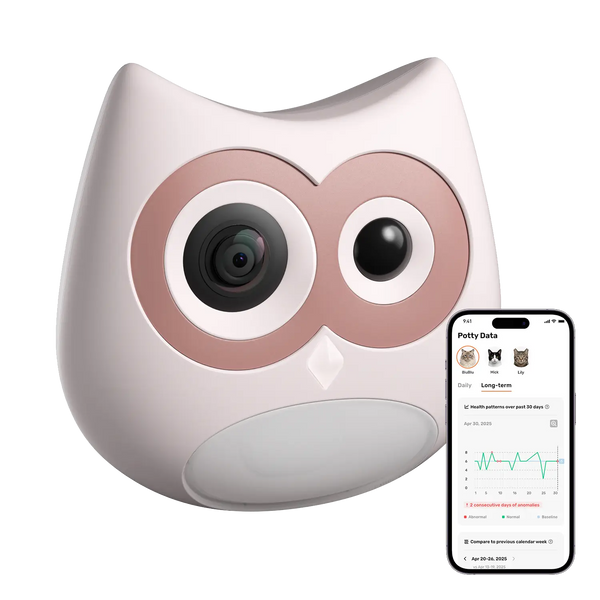
LitterLens connects litter-box cameras to one app and organizes detected visits by cat, helping larger households keep each animal’s records together. A cat can move between monitored boxes without leaving its history scattered across separate device logs. One Man Five Cats used five cameras across different smart litter boxes to monitor seven cats. Technically Jeff installed one camera in the Litter-Robot 4 that his six cats used most often. Their experiences show what a smart litter box monitor adds to a busy home and how to decide where cameras are needed.
Inside the Two Multi-Cat Households
These households used LitterLens at different scales. Philip of One Man Five Cats wanted consistent monitoring across several automatic boxes, while Jeff focused on the box his cats used most.
|
Household |
Cats in the Video |
LitterLens Setup |
|
One Man Five Cats |
Seven |
Five cameras across different automatic litter boxes |
|
Technically Jeff |
Six |
One camera installed in the most-used Litter-Robot 4 |
Philip started with two LitterLens cameras and later purchased additional units, expanding his setup to five cameras across different litter boxes.
One Man Five Cats: Seven Cats and Five LitterLens Cameras
For One Man Five Cats, testing different litter boxes created a practical problem: each brand kept its own records. Philip also had cats with similar weights, which made weight-based identification frustrating in his household. He wanted to know which cat had visited without repeatedly matching separate camera footage to litter-box logs.
Setting Up Cameras Across Different Litter Boxes
Philip first tried LitterLens with open automatic boxes, then expanded to every self-cleaning box he was using, including models with built-in cameras. Some enclosed boxes required a different angle. On his Litter-Robots, the basic mount did not point inward far enough for his preferred view, so he made a small 3D-printed wedge. He also tried the optional magnetic mount.
Choose the mounting position for each box’s shape. The camera needs a clear view of the litter area, enough room for the cat to move normally, and clearance from rotating globes or other moving parts. Use Live View to check the angle before fixing the mount. The adhesive mount is included; the magnetic mount and gooseneck holder are sold separately.
Reviewing Each Cat’s Visits in One Timeline
Philip particularly valued the way LitterLens collected events from different cameras under each cat’s profile. He explains that the app displayed the day’s visit count and average visit duration beneath each cat’s photo. When a cat used boxes in different rooms, he could review its activity without adding up separate device totals.
The combined history contains LitterLens records. It does not import measurements such as body weight from the automatic boxes’ own apps. Philip specifically noted this distinction because he also wanted his cats’ weight information in one place.
Technically Jeff: Six Cats and a Litter-Robot 4
Technically Jeff installed LitterLens in the Litter-Robot 4 his cats used most. He described a straightforward adhesive-bracket installation, with the camera sliding onto the mount, and reported that his cats largely ignored the device.
His interest in a pet health monitoring device came partly from an earlier experience with his cat Toby, who had needed surgery for a urinary blockage. That illness happened before he used LitterLens. In his review, Jeff valued being able to open saved visit clips and browse histories linked to his six cats’ individual profiles.
For an owner keeping an existing automatic box, his setup shows how a cat litter box monitor can add visual records with relatively little change to the cats’ routine. It documents activity at that shared box; covering additional locations is a separate equipment decision.

How Well Did Cat Identification Work?
Both creators described useful individual-cat recognition. Philip reported that LitterLens identified his cats well after a few days of training in his seven-cat household.
LitterLens supports recognition of up to 10 cats, but identification accuracy may decrease when monitoring more than six cats. If you have seven or more cats, we recommend contacting service@siipet.com to help assess whether LitterLens is suitable for your household.
Similar-Looking Cats and Obstructed Views
Similar-looking cats can be harder to distinguish when only part of the animal is visible. A camera angle should show the cat clearly as well as the litter surface. Philip questioned whether mounting a camera high above certain boxes would give it enough of a view of the cat’s face for identification.
He also described a different problem with Maximus, his fluffy Maine Coon kitten. Fur and immediate burying sometimes obscured what Maximus had left behind. Cat identification and a clear stool photo are separate outcomes. Moving the camera may improve the view, but a cat’s body or covering behavior can still hide the stool.
Checking and Reassigning a Visit
If a visit appears under the wrong cat, you can correct that event in the app. Philip described reassignment as easy, which matters when several cats share the same boxes:
- Open the visit and play its saved video.
- Compare the cat in the footage with the assigned profile.
- Reassign the event to the correct cat if needed.
Use a clear view of the animal to make the correction. If the clip is too obstructed to tell which cat appears, guessing would make the individual records less useful.
How Many Cameras Would Your Home Need?
Use one camera per separate litter box you want to monitor as your starting estimate. Three boxes in different rooms would therefore mean planning for three cameras. Several cats can use each monitored box, so the equipment count follows the layout rather than the number of cats. You can link up to 10 LitterLens devices to one account.
When monitoring more than six cats, identification accuracy may decrease. If you have seven or more cats, we recommend contacting service@siipet.com to help assess whether LitterLens is suitable for your household.
If you are building a smart litter box monitor system gradually, start with the most-used box, as Jeff did. Add cameras at other regularly used boxes when you want a fuller history. Until then, a cat’s recorded daily total includes only visits at covered locations.
For neighboring boxes, assess the view inside each one instead of relying on a wide shot of the room. High sides, entrances, and cats moving between boxes can obscure the activity you want to record. Check placement before buying extra mounts, and keep boxes in locations where your cats are comfortable using them.

FAQs About LitterLens in Multi-Cat Homes
Q1. Does Care+ Pricing Change With the Number of Cameras?
Yes. Care+ plans cost $5.99 per month for one device, $9.99 for two, and $12.99 for three or more. A five-camera setup falls into the $12.99 tier. Multi-cat recognition, visit logs, stool snapshots, and three-day visit-video storage are included free. Care+ adds abnormal stool and trend analysis, abnormal alerts, and 30-day visit-video storage. Prices and terms may change.
Q2. Can a Pet Sitter Access the Same Litter-Box Records?
Yes. Invite your sitter through Device Sharing so they can view the device’s videos and photos using their own SiiPet account. Open Me → Device Sharing → + Invite and send the invitation link. You can invite up to five people, giving caregivers access to the same visual records without sharing your password.
Q3. What Happens to Monitoring While One Camera Is Charging?
LitterLens can keep working while charging if it remains in position. Removing it to charge leaves that box without camera coverage, while other operating cameras continue recording at their locations. Jeff reported roughly three weeks of battery use in his setup; Philip’s busier setup fell short of the advertised maximum. Frequent recording can make a plugged-in arrangement more convenient.
Q4. Will a Visit Still Be Recorded if the Stool Is Covered?
Yes. A detected visit can retain its video, time, duration, and assigned cat even if the stool photo is unclear or unavailable. Videos document detected visits; stool photos capture visible stool separately. If the video briefly shows the stool before it is buried, you can save a screenshot from that moment.
Q5. Can I Add a New Cat to an Existing LitterLens Setup?
Yes. You can add a separate profile for a new cat, up to the 10-cat recognition limit. If the addition brings your household above six cats, we recommend contacting our support team to assess suitability.
Plan LitterLens Coverage Around Your Litter Boxes
Start with the boxes your cats already use and choose a workable camera position at each location you want covered. You can begin with one busy box or equip several from the outset. Before expanding, check that the first camera gives you useful footage of your cats’ visits. Build coverage around the records you need, while keeping the litter-box routine your cats already know.


