


Remote vet monitoring for pets, such as cats, means recording their habits at home and sharing them with your vet, so the vet works from dated records instead of memory. Your vet still diagnoses with an exam and tests. Home data helps by showing when a change started and how it developed. LitterLens tracks litter box visit count, visit duration, and stool appearance, and you can show that history to your vet.
What Is Vet Remote Monitoring Software for Cats?
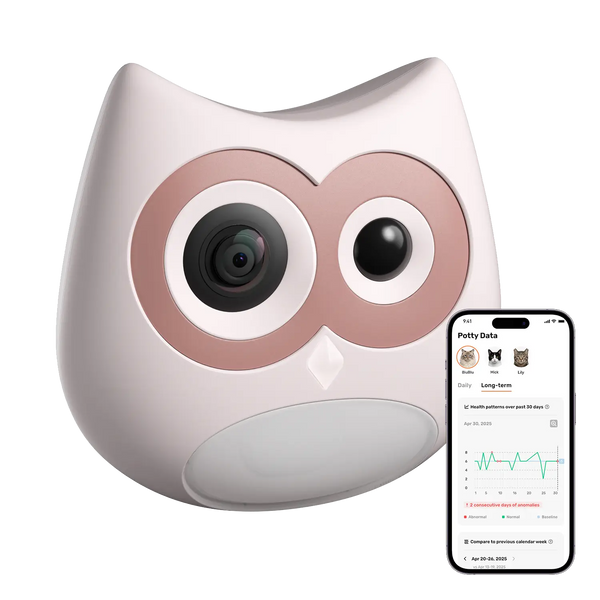
Remote monitoring for cats covers any home tool that records what your cat does and lets you pass that record to a vet, for example a litter box camera app, a behavior camera or a notes log. SiiPet LitterLens logs each cat's visit count and duration, analyzes stool shape and color, and records urine clump events. You review the timeline and clips in the SiiPet app. Abnormal-data alerts and analysis are part of the Care+ subscription, which keeps abnormal records for 12 months.
Why Do Vets Face Guesswork in Cat Health Consultations?
Cats hide symptoms, so owners often notice a problem late and remember it vaguely: "she seemed to be going more, maybe a week ago." In multi-cat homes it is harder still to know which cat is affected. Dated records give the vet a clearer starting point than recall alone. Our article on home behavior logs as first clinical evidence looks at why vets value this kind of history.
What Data Can You Share With Your Vet From Home?
LitterLens gives you timestamped visit logs, visit durations, urine clump events and stool images sorted by shape (hard, soft or watery) and color. Baselines take about seven days to form and around 30 days to stabilize, and changes are flagged per cat. Clump size is something you check when you scoop, and LitterLens does not see straining or posture. LitterLens does not diagnose or detect specific diseases such as UTIs or bladder stones; it is informational. See our cat fecal score chart for how vets describe stool changes.
| Feature | SiiPet LitterLens | Generic Pet Cameras |
|---|---|---|
| Multi-Cat Tracking | Recognizes individual cats (roughly 80%+), separate logs | Limited or no differentiation |
| Data for your vet | Visit timeline, stool images and clips in the app | Basic video, no bathroom logs |
| Free features | Live view, recording, visit count and duration data | Varies; storage often needs a subscription |
| Change flags | Flags changes from each cat's baseline (Care+) | Motion alerts only |
Does SiiPet Integrate With Vet or Telemedicine Software?
SiiPet does not present LitterLens as a tool that plugs into clinic or telemedicine software. The practical route is simple: review the timeline in the SiiPet app and show it during a video visit, or send your vet screenshots and short clips. Ask your clinic which format it prefers, and check the app for its current sharing options. Our guide to sharing pet health data with your vet lists what to include.
How to Prepare for a Vet Visit With Home Data
Before the visit, note when you first saw the change, how often it happens and whether your cat is eating, drinking and behaving as usual. Bring the visit timeline or a few clips that show the change. For urinary signs, the Cornell Feline Health Center FLUTD guide lists what vets ask about.
Some problems cannot wait for an appointment: a male cat straining with nothing coming out is an emergency, and no urine in 24 hours or no stool in 48 hours needs a vet (see emergency signs and vet urgency).

How Secure and Easy Is Sharing Cat Health Data with Vets?
You decide what to share: pick only the clips and screenshots that show the change. The camera also has a privacy mode that turns it off when you want it off.
To set up, mount LitterLens on a flat surface of a litter box larger than 50 x 38 cm and pair it with the SiiPet app; it is not recommended for automatic or self-cleaning boxes. For activity and rest patterns around the home, a behavior camera such as PawTrack shows how your cat moves. Our overview of what a litter box camera does covers the basics.
Which Cats Benefit Most From Sharing Home Data?
Senior cats, multi-cat households and cats with a history of urinary or digestive problems gain the most, because their vets often need to compare today's habits with last month's.
Browse the cat health monitoring collection to see the options. The iCatCare pain guide is worth reading before a visit for subtle signs to report.

Conclusion: Home Records Support Your Vet, They Do Not Replace the Exam
Remote monitoring does not diagnose your cat. It gives your vet dated, specific information, so the conversation starts from what happened and when. Use LitterLens records alongside your own notes, share the relevant parts with your vet, and leave the diagnosis to the exam and tests.
FAQs About Sharing Cat Health Data With Your Vet
How do I share SiiPet data with my vet?
Open the SiiPet app, review the visit timeline, stool snapshots and clips, and show them on a video visit or send screenshots and short clips. Ask your clinic which format it prefers.
Is SiiPet LitterLens accurate for multi-cat homes?
LitterLens recognizes individual cats with roughly 80% or better accuracy after you label each cat, and accuracy drops in homes with more than six cats. Check its per-cat logs against what you observe.
Does it require a subscription to share data with my vet?
No. Live view, recording and visit count and duration data are free, with 72 hours of local storage. Abnormal-data alerts and analysis need the Care+ subscription.
Can this detect cat UTIs early for vets?
No. LitterLens does not detect UTIs or diagnose any condition. It records visits, durations, urine clump events and stool appearance, and flags changes from your cat's baseline so you know when to call your vet.
What if I have questions about setup?
Contact SiiPet support through the website. Check the product page for the current trial and warranty terms.


