


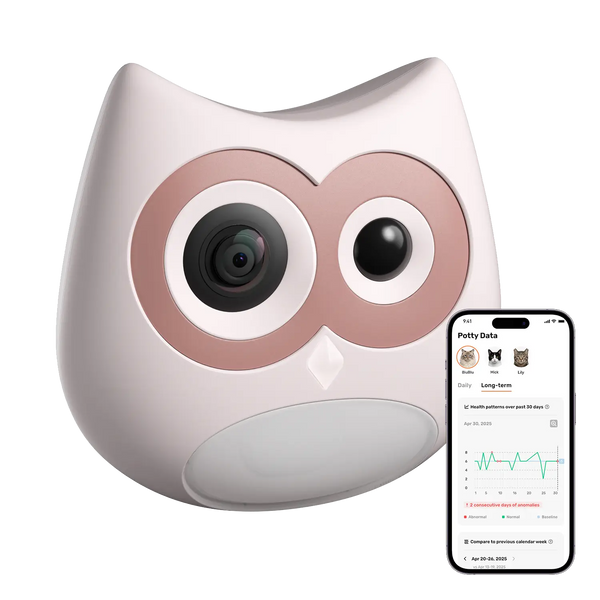
LitterLens is a multi-cat litter box camera that tracks health by recognizing which cat is in the litter box and keeping a separate log for each one. Its AI camera records every visit, and the app sorts the visits, visit counts, time in the box and stool photos into a profile for each cat. That way you can see which cat is changing, instead of guessing from a shared box. You label each cat once, and the app assigns later visits on its own.
What Is LitterLens and How Does It Work?
LitterLens is a litter box camera from SiiPet, designed to monitor your cat's health through its bathroom habits. It sleeps when the box is empty, wakes when a cat steps in, and records the visit with HD live view and night vision. On a full charge the battery lasts about one month under typical use. Pet ID+ is the feature that recognizes which cat is in the box.
For each visit, LitterLens analyzes stool shape and colour and logs visit duration, making it easier for owners to spot potential changes early. Key features include stool photos with timestamps, a water-resistant IPX5 body that can be rinsed clean, and alerts for unusual stool or data trends. The alerts are part of the optional Care+ subscription.
How Does Pet ID+ Distinguish Multiple Cats?
Pet ID+ learns from your labels. After the camera records litter box videos, each event starts as unassigned. You pick the right cat for one video per cat, and from then on the app automatically assigns future events to that cat. If a cat is seen rarely or two cats look alike, you may see the odd mistake, and you can correct it in the video. Corrections help the model improve over time.
Recognition accuracy is about 80% or better overall, and it depends on the number of cats, how similar they look and the lighting. Accuracy drops once a home has more than 5 cats, and the app supports up to 10. A Care+ subscription adds a more accurate multi-cat recognition model.
| Feature | Benefit for Multi-Cat Homes |
|---|---|
| Label each cat once | Later visits are sorted to the right cat automatically |
| Correct mistakes in the app | Fix a wrong label on any video, which helps the model learn |
| Separate profile per cat | Visit counts, time in the box and stool photos are not mixed between cats |
What Does LitterLens Track for Each Cat?
LitterLens logs each cat's daily visit count, average time in the box and stool images. Stool is checked for shape (hard pellets, soft or watery) and colour (black or tarry, bright red, grey, green or orange-yellow), and urine clump events are recorded too. It flags a stool that looks unusual, or a visit count or duration that moves away from that cat's own baseline. The baseline starts after about 7 days and becomes stable after roughly 30 days.
By tracking each cat individually, LitterLens can show changes that would otherwise go unnoticed in a shared box, and it gives you a dated record to show your vet. It does not diagnose. It does not measure weight, and it does not detect kidney disease, urinary tract infections, vomiting, parasites, dehydration or posture. Only a vet can say what a change means.
How Does App Monitoring Work Remotely?
The SiiPet app connects to LitterLens over your 2.4 GHz Wi-Fi network, so you can check on your cats while you are away. The app offers live view, a daily timeline of visits, stool photos and a switch for each cat's profile. Data refreshes every 2 hours.
Free accounts keep the most recent 72 hours of video on the device. With Care+ you get cloud storage of event videos for up to 1 month, abnormal records for 12 months, and alerts for unusual stool or data trends. Family members you invite, up to 5 people, can view videos, photos and data, but they cannot change device or pet settings.
Why Is Early Detection Vital in Multi-Cat Homes?
In multi-cat households, it is hard to tell which cat is unwell. Cats tend to hide symptoms, and when several cats share a litter box, a loose stool or a longer visit could belong to any of them. LitterLens separates the records, so a change shows up under the cat it belongs to.
For more on this problem, see our guides to monitoring several cats' litter box habits and finding which cat is sick.
A change that repeats over two or more days is worth a call to your vet, and the per-cat record makes that call more useful. Cornell's constipation guide and its overview of urinary problems describe two common reasons for changes at the litter box. If a cat strains and passes nothing, or has not urinated in 24 hours, contact a vet right away.
Which Setup Steps Enable Seamless Tracking?
Setting up LitterLens takes a few steps in the SiiPet app. Pair the camera over Bluetooth, connect it to a 2.4 GHz Wi-Fi network, and then mount it. The included adhesive mount sticks to a flat surface on semi-open and enclosed boxes. For low, open boxes there is an optional clip-on bracket in the mounts and holders collection. Then add your cats to the app with a name and photo.
For best results, position the camera so the litter area is clearly visible in the live view, and pick a quiet spot away from heavy foot traffic. Label each cat's first litter box video in the app, so the system can assign later visits itself. The litter box should be larger than an L size (over 50 x 38 cm), and LitterLens is not recommended for automatic or self-cleaning litter boxes. See our guide to where to place a litter box camera for placement tips.
How Accurate Is LitterLens Cat Recognition in Real Homes?
Overall recognition accuracy is about 80% or better. Real homes vary: cats that look alike, dim light, and cats that rarely use the box all make mistakes more likely. Accuracy also drops as the number of cats rises past 5. The app lets you correct any wrong label, and each correction helps the model improve.
Stool flags are informational and are not a medical result. Lighting, food and camera angle can change how stool appears, so check the litter box directly when the app flags something.

What Are the Benefits of Per-Cat Records?
The main benefit of separate logs is knowing which cat needs attention. With separate visit counts, times and stool photos for each cat, it is easier to describe a change to your vet: which cat, since which day, and what it looked like. That is the value of the record. It does not replace a vet visit.
| Benefit | What It Means in Practice |
|---|---|
| Per-cat visit and duration logs | See which cat is visiting more often or staying longer |
| Stool photos by cat | Show your vet the stool that belongs to the cat you are asking about |
| Remote access | Check live view and the daily timeline while you are away |
How Does LitterLens Fit a Multi-Cat Home?
Each litter box needs its own camera, so a home with more than one box needs more than one LitterLens. The x2 bundle and the multi-cat health monitoring collection list the multi-camera options. One account can hold several devices, and Care+ plans are priced by device count at $5.9, $9.9 and $12.9 per month.
Key Takeaways and Actionable Advice
LitterLens gives multi-cat households a separate record of visits, time in the box and stool for each cat. To get started, mount it on your litter box, add your cats in the app and label each cat once. Review the timeline regularly and contact a vet when a change repeats or when something looks wrong.
FAQs About Multi-Cat Tracking With LitterLens
How many cats can LitterLens track?
The app supports up to 10 cats. Recognition accuracy is about 80% or better overall and drops when there are more than 5 cats.
Is LitterLens easy to install?
Yes, setup is app-guided. You pair the camera by Bluetooth, connect it to 2.4 GHz Wi-Fi and stick it on a flat surface of the litter box. An optional clip-on bracket is available for low, open boxes.
Does it work without Wi-Fi?
LitterLens connects over 2.4 GHz Wi-Fi, and 5 GHz networks are not supported. Recordings are stored on the device for the most recent 72 hours, and remote viewing needs a working connection.
Can I share data with my vet?
Yes. You can review visit logs and stool images in the SiiPet app and go over them with your veterinarian.
What if my cats look identical?
Identical-looking cats are one of the situations that lowers recognition accuracy. Label each cat once, then correct any wrong labels in the video so the model learns from you.


