


As fall arrives, cooler temperatures, indoor heating, holiday travel, and changing household schedules can quietly affect your cat’s daily routine. Your cat may drink less, experience digestive upset after a food change, or feel stressed by visitors and increased time indoors. That makes the fall transition an important time to pay closer attention to litter-box habits. Repeated trips, straining, loose stool, longer visits, or accidents outside the box may signal that your cat needs extra care or veterinary attention.

Three Problems to Watch During the Fall Transition
The three changes that deserve the most attention are signs of urinary discomfort, digestive upset, and stress around the litter box. They may look similar at first, but they do not carry the same level of urgency.
1. Urinary Discomfort or Obstruction
Cats with urinary discomfort may enter the litter box more often, remain in position longer, strain, cry, or urinate outside the box. Blood in the urine and frequent licking around the genital area are also possible signs.
Frequent trips, straining, and bloody urine may resemble cat UTI symptoms, but the same signs can also occur with idiopathic cystitis, urinary stones, bacterial infections, urethral plugs, and other lower urinary tract conditions. A veterinarian needs to determine the underlying cause.
Male cats require particular attention because their narrower urethra makes complete obstruction more likely. A male cat straining to pee while producing little or no urine needs immediate veterinary care.
2. Cat Digestive Issues
Travel, visitors, unfamiliar treats, and sudden food changes can upset a cat’s digestion. The litter box may then show softer stool, diarrhea, mucus, an unusual color, or a change in bowel-movement frequency.
One soft stool may be temporary, especially after a minor food or routine change. Any blood in cat stool, repeated diarrhea, or accompanying vomiting, poor appetite, lethargy, or weight loss deserves closer attention.
Black or tarry stool may indicate bleeding higher in the digestive tract, while fresh red blood may come from lower down. Contact a veterinarian if either appears.
3. Stress-Related Litter-Box Changes
Visitors, travel, closed doors, rearranged furniture, or changes in household schedules may affect where a cat rests and how safely it can reach the litter box. In multi-cat homes, one cat may also guard a box or block another cat’s route.
Multi-cat tension is especially relevant because it can affect how comfortably each cat accesses shared resources. In a case-control study involving 31 cats with feline idiopathic cystitis and 24 unaffected housemates, conflict between cats was the environmental factor that stood out most clearly.
Stress-related changes may appear as avoiding a particular box, waiting until the area is quiet, urinating elsewhere, or making brief visits without settling. These behaviors can also have medical causes, so a new or persistent change should not be assumed to be behavioral.

What Signals May Be Hiding in the Litter Box?
Cleaning the litter box shows what was left behind, but it may not reveal how many attempts occurred, how long the cat stayed, or which cat produced the urine or stool. Watch for changes from your cat’s usual pattern.
- Several visits within a short period: Repeated trips may indicate urgency, discomfort, or difficulty passing urine.
- Straining or remaining in position: A cat may be struggling to urinate or defecate. If you cannot tell which, treat the possibility of urinary obstruction seriously.
- Little or no visible urine: A cat repeatedly trying to urinate without producing a normal amount needs emergency veterinary care.
- Urine outside the litter box: This may be related to pain, urgency, stress, litter-box aversion, or difficulty reaching the box.
- Loose, bloody, or black stool: Look for repeated changes and other signs such as vomiting, reduced appetite, or low energy.
- A change in visit duration: A noticeably longer visit may reflect straining, while repeated short visits may show unsuccessful attempts or discomfort.
If diarrhea continues for more than a day or two and appears alongside poor appetite, lethargy, or vomiting, seek veterinary care promptly.
How a Litter Box Camera Helps You See What Changed
Many important litter-box events happen overnight or while no one is in the room. In a multi-cat home, shared urine clumps and buried stool can make it even harder to identify which cat’s routine has changed.
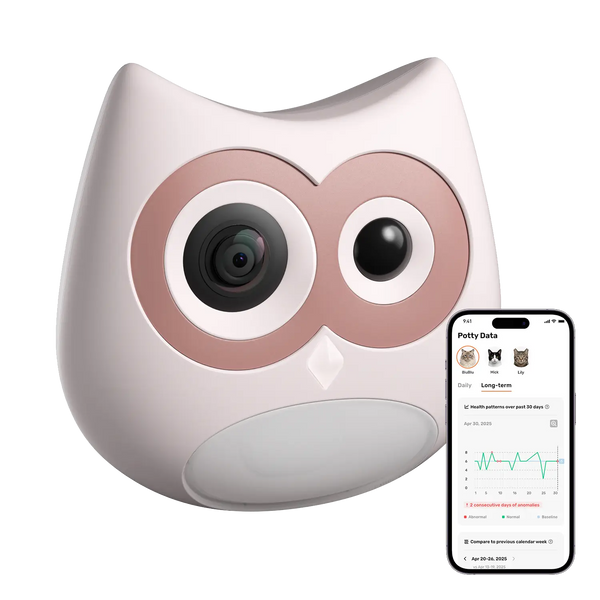
The LitterLens litter box camera automatically records video for every detected litter-box visit. It logs the cat’s identity, visit time, and visit duration, allowing owners to review whether several short visits occurred, a cat stayed longer than usual, or an unusual posture appeared during the visit.
When visible stool has a clear camera view, LitterLens also captures a separate stool photo. Comparing these images can help owners notice changes in visible shape, color, or texture and determine whether the change occurred once or continued.
In multi-cat homes, visual recognition associates visits with individual cat profiles. If a visit is assigned incorrectly, the owner can review and reassign the record. This makes it easier to connect a change with one cat instead of relying on the combined contents of a shared box.
Care+ can flag supported abnormalities in visible stool and litter-box habit trends for review. Urination behavior or urine may appear in a visit video when the view is clear, but LitterLens does not automatically classify visits as urination or defecation. It does not create a separate urine photo, measure urine output, or analyze urine, and its records do not replace veterinary testing.

Practical Ways to Support Your Cat This Fall
Fall care should focus on keeping water, food, litter boxes, and daily routines easy to access. A few simple checks can reduce avoidable disruption and make genuine changes easier to recognize.
Keep Fresh Water Easy to Find
Place clean water bowls in quiet areas away from litter boxes and offer more than one drinking location when possible. Check whether closed doors, moved furniture, luggage, or holiday decorations have made a familiar bowl harder to reach.
A fountain may suit cats that prefer moving water, while others continue to favor a regular bowl. Follow your cat’s actual drinking preference instead of relying on one setup for every cat.
Food also contributes to total fluid intake. In a controlled dietary-moisture study involving six healthy cats, the diet containing 73.3% moisture increased total fluid intake and produced more dilute urine than diets containing 53.2% moisture or less.
Because the study was small and involved healthy cats, discuss dietary changes with a veterinarian if your cat has urinary stones, kidney disease, a previous obstruction, or a prescription diet.
Make Food Changes Gradually
Avoid introducing several new foods or treats at once. A sudden diet change can cause temporary diarrhea and make it difficult to identify which food caused the problem.
Keep holiday food, bones, string, and food wrappers out of reach. If digestive changes appear after introducing something new, pause further diet changes and monitor your cat’s appetite, energy, vomiting, and next bowel movement. Contact a veterinarian if the signs continue or become more severe.
Keep Litter Boxes Familiar and Accessible
Try to keep the usual litter type, box location, and cleaning schedule consistent during travel or holiday preparations. Make sure guests, luggage, decorations, or closed doors do not block the route.
In a multi-cat home, place boxes where one cat cannot easily guard the entrance or trap another cat inside a covered space. Senior cats may benefit from a low-entry box located close to their preferred resting area.
Compare Changes With Your Cat’s Normal Pattern
A single long visit or soft stool may be an isolated event. Several short visits, repeated straining, recurring loose stool, or a continued change in timing deserves closer attention.
Review recent activity against your cat’s usual frequency and visit duration. Add only useful background information that the device cannot know, such as a food change, medication, visitor, travel day, vomiting, reduced appetite, or conflict between cats.
The goal is a clearer record of what changed, when it began, and whether it continued. A litter box camera can preserve that timeline and provide useful context when a veterinarian needs to investigate.
FAQs
Q1. How Many Cats Can LitterLens Recognize?
LitterLens supports recognition of up to 10 cats. Identification accuracy may decrease when monitoring more than six cats, so households with seven or more cats should contact service@siipet.com to assess whether LitterLens is suitable for their setup.
Q2. Can Family Members or Pet Sitters Review the Records?
Yes. Device Sharing allows up to five invited family members or caregivers to access the same LitterLens records without sharing the primary account password.
Q3. Can LitterLens Measure My Cat’s Urine Output?
No. LitterLens records detected visits, visit times, durations, and videos, but it does not measure urine volume or analyze urine. Owners can still inspect urine clumps during routine cleaning.
Q4. What Happens If Stool Is Buried Before a Photo Is Captured?
The visit can still retain the cat’s identity, visit time, duration, and video when a clear stool photo is unavailable. The owner can also save a useful frame from the video or add a separate photo.
Q5. How Long Are LitterLens Visit Videos Stored?
Free users can review approximately the most recent 72 hours of visit video. Care+ provides up to one month of visit-video storage, along with supported abnormal stool and litter-box habit analysis.


