

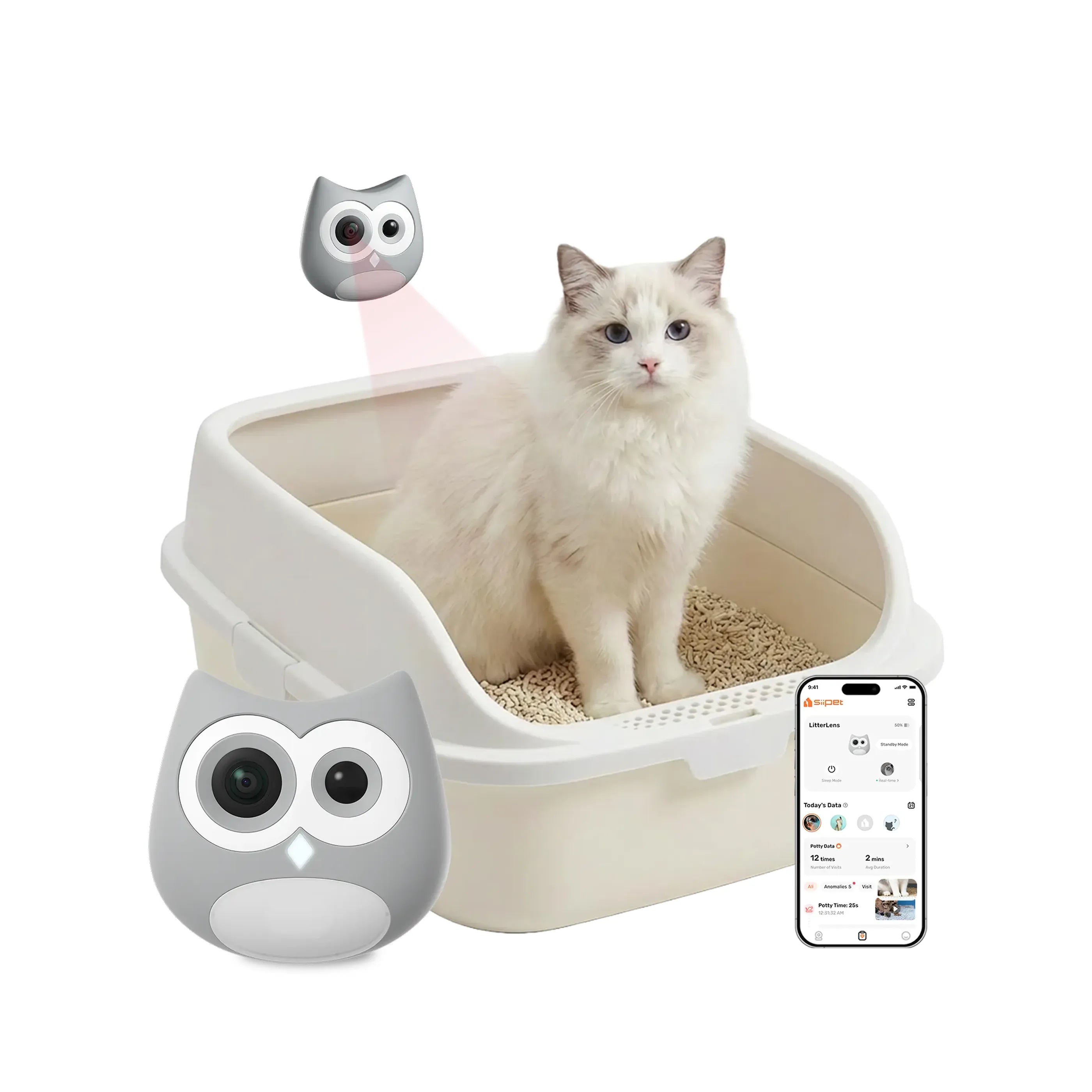
Regular cat weight monitoring can signal early kidney disease through gradual weight loss, a subtle indicator often missed without weekly tracking. A litter box camera like SiiPet LitterLens tracks each cat's visit frequency and duration, which can flag changes worth raising with your vet. It does not measure weight or detect kidney disease.
Check: AI-Powered Cat Wellness Camera
Why Does Weekly Cat Weight Tracking Matter for Early Health Detection?
Weekly cat weight tracking matters because weight loss is a silent indicator of health issues like chronic kidney disease (CKD), prevalent in senior cats. Litter box visit changes tracked by a device like SiiPet LitterLens can add context between weigh-ins, but only a scale measures weight.
Chronic kidney disease affects many senior cats, Proactive weekly checks spot subtle declines. Traditional manual weighing lacks trends, but pairing it with litter box visit data can show patterns like increased visits that are worth a vet check.
What Are Ideal Weight Ranges for Cats by Breed and Age?
Ideal cat weights vary: Maine Coons 10-16 lbs, Siamese 6-8 lbs, domestic shorthairs 8-12 lbs. Kittens gain rapidly to 4-6 lbs by 6 months; adults (1-7 years) hold steady; seniors (7-10 years) may lose 5%; geriatrics (10+) risk 10% drops signaling kidney issues. A 5-10% loss over 4 weeks warrants vet review.
| Breed/Age Group | Ideal Weight Range (lbs) | Notes |
|---|---|---|
| Maine Coon (Adult) | 10-16 | Larger frame; monitor for obesity |
| Siamese (Adult) | 6-8 | Slim build; quick weight loss risks |
| Domestic Shorthair (Adult) | 8-12 | Average; common in multi-cat homes |
| Senior (7-10 years) | -5% from prime | Early CKD signs |
| Geriatric (10+ years) | -10% threshold | Weekly checks essential |
Assess body condition by rib feel and waist visibility. In multi-cat homes, similar appearances mask individual trends; SiiPet LitterLens multi-cat recognition maintains separate health logs per cat.
How Does AI Litter Box Monitoring Complement Traditional Weight Scales?
AI litter box monitoring complements scales by tracking visit frequency and duration, which adds context a scale does not. Scales offer snapshots; SiiPet LitterLens provides daily visit and stool data you can share with your vet. It does not measure posture or diagnose urinary or digestive problems.
Multi-cat recognition distinguishes individual cats, unlike scales. The SiiPet Care+ app stores 12 months of data for vet sharing.
Which Cat Weight Scales Offer the Best Home Monitoring Features?
Best cat weight scales include digital pet models ($100-300) and veterinary-grade ($400-700), but a litter box camera like SiiPet LitterLens serves a different purpose: it tracks visits and stool, not weight, and works with your existing litter box. App connectivity logs trends; Care+ offers 12-month timelines versus basic scale apps.
LitterLens has a battery that lasts about a month on typical use and an IPX5 water-resistance rating. It fits open-top and hooded litter boxes larger than L size (over 50×38 cm) and is not recommended for automatic litter boxes.
How Do Weight Loss Patterns Signal Kidney Disease in Cats?
Weight loss patterns signal kidney disease in stages: early (1-2) asymptomatic, advancing to visible loss in stages 3-4. Behavioral shifts like increased litter visits can also be an early sign. SiiPet LitterLens flags changes in visit frequency from a cat's own baseline, which you can bring to your vet.
What's the Best Strategy for Multi-Cat Household Weight Monitoring?
Best strategy for multi-cat homes uses AI with Pet ID+ like SiiPet LitterLens to track individuals separately, unlike scales that can't isolate cats. App dashboards show per-cat timelines for visits and stool analysis, reducing guesswork.
Long or repeated visits are worth mentioning to your vet.
Why AI Early Detection Reduces Long-Term Costs and Extends Feline Lifespans?
Noticing changes early gives you more time to act with your vet. SiiPet's monitoring supports proactive care, and Care+ keeps 12 months of records you can share with your vet.
Check: Smart Owner's No-Subscription Cam
Conclusion
Weekly cat weight monitoring paired with litter box tracking helps you spot changes earlier. Scales provide static data; SiiPet LitterLens adds behavioral insights like visit frequency and stool analysis. Learn more about LitterLens at siipet.com/products/litterlens. Download SiiPet Care+ on iOS or Android.
FAQs
Can I use a regular bathroom scale to weigh my cat at home?
Yes, weigh yourself alone then with your cat and subtract. This snapshot misses trends; SiiPet LitterLens tracks daily visit patterns, which adds context but does not measure weight.
How often should I weigh my senior cat to detect kidney disease early?
Weigh weekly for 10+ year olds. Combine with litter box visit tracking such as SiiPet LitterLens, which flags changes in visit frequency from a cat's baseline.
Does SiiPet LitterLens replace a cat weight scale?
No, it complements by tracking behaviors preceding weight decline. Multi-cat recognition tells cats apart with accuracy of about 80% or more, which drops in homes with more than 5 cats.
What if my cat seems healthy but loses weight gradually?
Gradual loss signals silent CKD or thyroid issues. LitterLens does not detect CKD or thyroid disease; a vet can test for them.
Is a cat weight scale worth the investment for a multi-cat household?
Scales struggle isolating cats; LitterLens tracks individual cats' litter box visits and stool, which helps you notice changes and call your vet early.


