

A healthy cat typically weighs 8–11 lbs, but ideal ranges vary significantly by breed. Domestic Shorthairs average 8–11 lbs, Maine Coons range 10–25 lbs, and Siamese cats weigh 6–12 lbs. Obesity thresholds begin at 15+ lbs for average breeds and 30+ lbs for larger ones. Rather than relying on single weigh-ins, tracking weight trends through litter habits offers early obesity detection—AI-powered monitoring like LitterLens can flag constipation and digestive changes linked to excess weight, providing actionable insights for your veterinarian.
Check: AI-Powered Cat Wellness Camera
What Is the Average Healthy Cat Weight?
Adult cats typically weigh 8–11 lbs (3.6–5 kg), though this baseline applies primarily to mixed domestic breeds. Male cats often weigh 10–15% more than females due to larger muscle mass and frame size. Age significantly impacts weight: kittens start at 1–4 lbs and gain rapidly during their first months, while senior cats (ages 10+) may lose muscle mass despite maintaining similar scale readings. Neutering or spaying typically increases weight by 1–3 lbs due to metabolic changes, so adjusted expectations help prevent unnecessary concern.
| Life Stage | Weight Range (lbs) | Weight Range (kg) | Notes |
|---|---|---|---|
| Kitten (0–6 months) | 1–4 | 0.45–1.8 | Rapid growth; double birth weight in 8 weeks |
| Kitten (6–12 months) | 4–8 | 1.8–3.6 | Approaching adult size |
| Adult (1–7 years) | 8–11 | 3.6–5 | Peak healthy weight; males typically heavier |
| Senior (7+ years) | 7–10 | 3.2–4.5 | May lose muscle; maintain lower end to prevent strain |
How Much Should Cats Weigh by Breed?
Breed genetics dramatically influence ideal weight ranges. Persians and British Shorthairs have heavier, denser frames and weigh 7–12 lbs and 9–18 lbs respectively, while Bengals and Ragdolls fall into 8–15 lbs and 10–20 lbs ranges. Maine Coons, among the largest domestic breeds, healthily weigh 10–25 lbs. Siamese and other lean breeds maintain 6–12 lbs. Understanding breed standards prevents misclassifying a naturally larger cat as obese or a smaller breed as underweight. Body Condition Score (BCS, rated 1–9) provides better accuracy than scale weight alone—a score of 4–5 indicates ideal fitness across all breeds.
| Breed | Ideal Weight (lbs) | Obese Threshold (lbs) | Body Frame |
|---|---|---|---|
| Domestic Shorthair | 8–11 | 13+ | Medium |
| Siamese | 6–12 | 14+ | Lean |
| Persian | 7–12 | 15+ | Dense |
| British Shorthair | 9–18 | 22+ | Sturdy |
| Bengal | 8–15 | 18+ | Muscular |
| Maine Coon | 10–25 | 30+ | Large |
| Ragdoll | 10–20 | 24+ | Large-boned |
What Are Signs of an Obese Cat and Weight Risks?
Obese cats display visible red flags: ribs that cannot be felt beneath the skin, absence of a visible waist, sagging abdominal fat, and reduced mobility or reluctance to jump. Obesity increases risk for diabetes, urinary tract infections (UTIs), arthritis, and heart disease. Cats weighing 20% or more above their ideal weight enter obese classification—for a 10-lb cat, this threshold is 12+ lbs. In multi-cat households, tracking individual eating patterns becomes crucial since weight gain may go unnoticed without AI-powered monitoring. Litter box changes like infrequent visits or constipation often signal obesity-related health decline before scale measurement reveals the issue.
Why Do Weight Trends Matter More Than Single Measurements?
Single weigh-ins provide snapshots, but trends reveal how your cat's health evolves over weeks and months. Gradual weight gain often accompanies decreased litter box visits, harder stools, or reduced activity—patterns that single measurements miss entirely. Correlating litter behavior with weight changes helps identify lifestyle or dietary problems early. In multi-cat homes, distinguishing which cat is gaining weight proves difficult without individual tracking. AI-powered litter box monitoring captures these behavioral trends automatically, providing veterinarians with comprehensive 12-month health histories rather than isolated data points.
SiiPet Expert Views
"Weight trends tell a richer story than scales alone. With LitterLens, we monitor stool consistency, visit frequency, and behavioral patterns over 12 months—capturing early signs of constipation, digestive strain, or reduced mobility linked to obesity. The AI analyzes these toileting trends across multiple cats simultaneously, flagging which cat shows concerning patterns like reduced visits or harder stools. Sharing these detailed trends with your veterinarian enables data-driven decisions rather than guesswork. For multi-cat homes, this individual tracking prevents assumptions and ensures each cat receives appropriate dietary or behavioral adjustments. Our 4.93-star reviews and 4 veterinary endorsements reflect how early detection through trend analysis helps owners intervene before obesity complications develop."
How Does Cat Age and Lifestyle Affect Ideal Weight?
Kittens gain rapidly—doubling their birth weight within 8 weeks—and require age-appropriate feeding schedules to support growth without premature obesity. Adult cats (1–7 years) maintain stable weights when given consistent diet and activity. Senior cats (7+ years) often develop sarcopenia (muscle loss), making weight maintenance challenging; aim for 5–10% below peak weight to reduce strain on aging joints and organs. Indoor cats typically weigh more than outdoor cats due to reduced calorie expenditure, requiring portion adjustments. Multi-cat households risk portion inflation if feeding protocols lack precision, as cats may consume excess portions intended for housemates.
How Can You Track Your Cat's Weight Trends at Home?
Weigh your cat consistently on the same scale, at the same time (preferably morning), and average multiple readings for accuracy. Use a smartphone app to log weekly or bi-weekly measurements, creating a visible trend line. However, non-invasive litter box monitoring provides earlier warnings—changes in visit frequency, urination patterns, or stool consistency often precede noticeable scale changes. Complementing home scales with behavioral tracking through AI tools like PawTrack camera offers a holistic view of your cat's mobility and activity levels, which correlate strongly with healthy weight maintenance. Combining these methods catches obesity progression faster than scales alone.
When Should You See a Vet for Cat Weight Issues?
Schedule a veterinary visit if your cat gains or loses more than 10% of body weight within weeks, or if weight changes coincide with lethargy, reduced litter box use, or abnormal stools. These combinations signal underlying conditions—chronic kidney disease, UTIs, diabetes, or inflammatory bowel disease—requiring professional diagnosis. Bring multi-month weight logs and litter behavior records to your appointment; trends matter far more than single measurements for identifying disease patterns. If using AI health monitoring tools, share 12-month timelines with your veterinarian to enable data-backed diagnosis and treatment planning.
Check: Smart Owner's No-Subscription Cam
Can AI Tools Like LitterLens Prevent Cat Obesity?
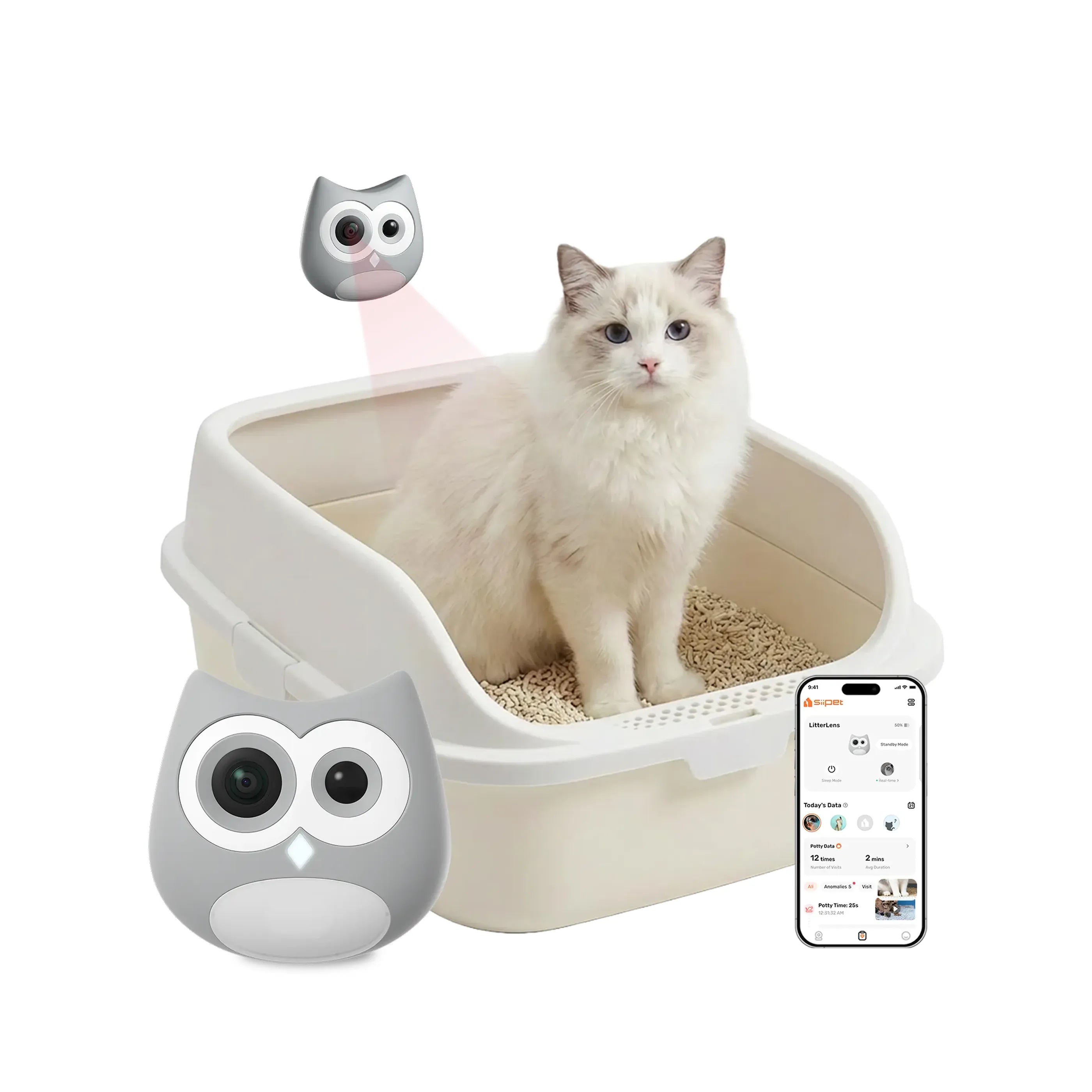
LitterLens, the world's first AI-powered cat health monitor, detects weight-related patterns by analyzing stool quality, visit frequency, and litter box duration. When obesity develops, constipation often emerges as cats struggle with movement; LitterLens flags hard or irregular stools as early warnings. Frequent urination or abnormal stools may indicate UTIs or digestive strain—common obesity complications—triggering instant app alerts before veterinary intervention becomes urgent. The device fits all litter box types (open, hooded, automatic), uses infrared heat sensors plus AI vision to identify individual cats with over 95% accuracy, and stores 12 months of health data accessible via the SiiPet Care+ app on iOS and Android. With a 30-day wireless battery, 4.93-star reviews, and 1-year replacement guarantee, LitterLens enables preventive obesity monitoring without intrusive weigh-ins.
What Role Does Diet Play in Maintaining Healthy Cat Weight?
High-quality protein-based diets support lean muscle maintenance, while carbohydrate-heavy foods increase obesity risk. Portion control matters significantly—overfeeding by 10–15% daily accumulates to 2–3 lbs of unwanted weight annually. Feeding multiple cats in shared spaces often leads to portion confusion; using microchip feeders helps ensure each cat receives correct amounts. Wet food typically contains fewer calories per volume than dry kibble, making it effective for weight management. Switching treats to lower-calorie options or using dried meat instead of commercial snacks supports weight goals. Consulting your veterinarian about prescription weight-management diets may prove necessary for cats already obese.
Does Neutering or Spaying Affect Healthy Weight Range?
Yes, spaying or neutering typically increases weight by 1–3 lbs due to metabolic rate reduction of 20–30%. Post-surgical cats require 15–25% fewer calories than intact cats, yet appetite often remains unchanged, leading to gradual weight gain. Adjust portions downward 1–2 weeks after surgery to prevent obesity. Monitoring litter box activity post-surgery using tools like LitterLens helps confirm that reduced exercise (natural during recovery) doesn't trigger constipation or urinary issues. Most veterinarians recommend maintaining cats at the lower end of their ideal weight range post-surgery to offset metabolic slowdown.
How Can Multi-Cat Households Track Individual Weight Trends?
In homes with multiple cats, individual tracking prevents averaging out concerning patterns. Weigh each cat separately weekly using a kitchen scale or veterinary office scale, logging results by name. Observing litter box use per cat proves challenging visually, but AI-powered monitoring like LitterLens uses Pet ID+ technology to recognize individual cats through body shape and markings with over 95% accuracy, maintaining separate health timelines for each animal. This technology eliminates guesswork about which cat is gaining weight or showing digestive changes. Each cat receives distinct alerts and trends in the SiiPet Care+ app, enabling targeted interventions for the cat requiring dietary or behavioral adjustments.
Conclusion
Determining ideal cat weight requires understanding breed-specific ranges (8–11 lbs for average domestic cats, wider ranges for larger breeds), age, and individual metabolism rather than applying one-size-fits-all standards. Weight trends matter far more than single scale readings; monitoring litter box habits, stool consistency, and mobility provides earlier obesity detection than occasional weigh-ins. Tools like LitterLens bridge this gap by tracking 12-month litter behavior patterns, flagging obesity-related issues like constipation or UTIs before they become serious. Combined with regular veterinary check-ups and portion-controlled diets, comprehensive trend analysis—including behavioral monitoring—keeps your cat at a healthy weight throughout life. Start tracking today using the SiiPet Care+ app on iOS or Android, take advantage of the 30-day risk-free trial, and empower yourself with data-driven insights to prevent your cat's silent health struggles.
FAQs
What is a healthy weight for my cat's breed?
Healthy weight varies by breed: Siamese cats ideally weigh 6–12 lbs, Domestic Shorthairs 8–11 lbs, Maine Coons 10–25 lbs, and British Shorthairs 9–18 lbs. Use Body Condition Score (BCS 4–5 out of 9) for breed-independent accuracy. Consult breed-specific standards and your veterinarian to establish appropriate targets.
How much weight gain qualifies as obesity in cats?
Cats are considered obese when they weigh 20% or more above their ideal weight. For a cat with an ideal weight of 10 lbs, obesity begins at 12 lbs. Breed and frame size influence thresholds, so consult your veterinarian for personalized obesity classifications and monitoring strategies.
Does cat weight change significantly with age?
Yes, dramatically. Kittens weigh 1–4 lbs and gain rapidly; adults (1–7 years) stabilize at 8–11 lbs; seniors (7+ years) often lose muscle, requiring adjusted expectations and lower targets to reduce strain. Track trends across life stages rather than assuming static ideal weights.
Can LitterLens directly detect obesity in cats?
LitterLens doesn't measure weight directly, but detects obesity-related complications like constipation, abnormal stools, or reduced litter box visits—early warning signs of excessive weight. AI analysis flags these patterns over 12 months, enabling early intervention before obesity becomes severe.
Is SiiPet LitterLens suitable for multi-cat households?
Yes, LitterLens uses Pet ID+ technology to recognize individual cats with over 95% accuracy and maintains separate health timelines for each animal. Multi-cat families receive distinct alerts and trends per cat in the SiiPet Care+ app, eliminating guesswork about which cat needs intervention.


Leave a comment
This site is protected by hCaptcha and the hCaptcha Privacy Policy and Terms of Service apply.