



For dedicated litter-box monitoring, SiiPet LitterLens is the better indoor pet camera. It links each visit to a recognized cat, records the time and duration, saves stool snapshots, and organizes footage into a usable history. Wyze Cam Pan v3 can watch a larger room, but it does not create individual litter-box records or track bathroom patterns. Cat owners who need to know who used the box, how often, and what changed will get more relevant information from LitterLens.
LitterLens vs. Wyze Cam Pan v3: Quick Comparison
LitterLens has a clear advantage for litter-box monitoring because its camera and app are designed around bathroom activity. Wyze offers wider video coverage, but owners must interpret general motion footage themselves.
| Feature | SiiPet LitterLens | Wyze Cam Pan v3 |
|---|---|---|
| Main purpose | Litter-box visit and behavior-pattern monitoring | General room and pet monitoring |
| Camera view | Fixed view of the litter area | 360-degree pan and 180-degree tilt |
| Individual cat tracking | Separate records for recognized cats | General pet detection with a paid plan |
| Information saved | Visit time, duration, photos, video, and stool snapshots | Motion events, live video, and local recordings |
| Power | 5,000 mAh rechargeable battery | Continuous power through a 6-foot cable |
| Free storage | Three-day rolling storage for visit videos | Local storage requires a microSD card |
| Paid features | Abnormal analysis, alerts, and longer history | Smart detection and cloud event recording |
| Privacy scope | Focused on the litter-box area | May record a wider room |
Why Can Litter Box Monitoring Help Owners Notice Changes Earlier?
Changes in litter box habits may be among the first visible signs that a cat needs closer attention. Owners cannot watch every visit, and important details may disappear before the litter box is cleaned.
Capture Stool Before Litter Hides the Details
Fresh stool is easier to assess than stool that has been sitting in litter for several hours. Loose stool may absorb litter and start to resemble a urine clump. Blood, mucus, or unusual colors may also be difficult to see against gray or dark litter.
A camera can capture the stool soon after the cat leaves, while its shape, consistency, and color are still easier to recognize. These images cannot diagnose a condition, but they may help owners notice changes that routine scooping misses.
See What Happens During the Visit
Video can provide context that the litter itself cannot show. Owners may be able to review whether the cat:
- Returns to the box repeatedly
- Stays longer than usual
- Appears to strain
- Changes posture or seems uncomfortable
- Enters and leaves without producing much waste
- Cries, rushes away, or avoids the box
These signs can have several possible causes. Repeated straining with little or no urine can be an emergency, especially in male cats, and requires immediate veterinary care.
Identify the Right Cat in a Multi-Cat Home
Finding unusual stool does not tell an owner which cat produced it. A general room camera may record the visit, but the owner still has to identify the cat manually.
LitterLens connects recognized visits, images, videos, and habit records to individual cat profiles. This reduces guesswork when several cats share the same litter box.
Give the Veterinarian a Clearer Timeline
Owners may struggle to remember when a change began or how often it happened. Dated images, videos, visit frequency, and time spent in the box can provide a clearer history.
These records do not replace an examination or diagnostic testing. However, they can help the owner describe changes more accurately and give the veterinarian useful context.

What Does a Dedicated Litter-Box Camera Track That a General Camera Does Not?
A standard indoor pet camera saves video after movement occurs. A dedicated cat litter-box camera such as LitterLens converts a recognized visit into a structured record tied to the cat, time, duration, photos, video, and stool snapshot.
The free plan includes:
- Litter-box visit tracking
- Stool snapshots
- Multi-cat recognition
- Live view
- Visit alerts
- Three-day visit-video storage
Paid features add abnormal stool analysis, trend analysis, instant alerts, 30-day visit-video storage, and abnormal-event records kept for up to 360 days.
Wyze Cam Pan v3 records motion, supports live viewing, and can identify general pet events through Cam Plus. It does not create a bathroom timeline for each cat. Owners still need to open clips, identify the animal, and decide what happened.
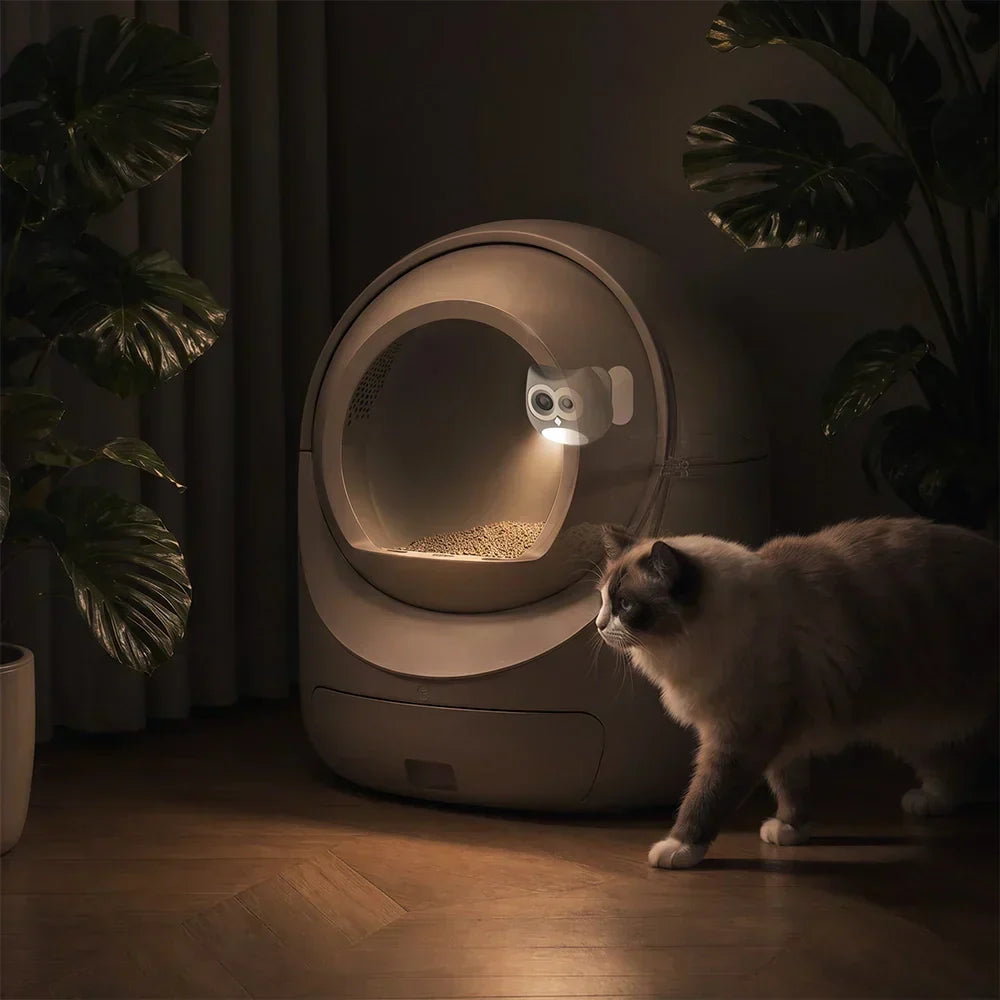
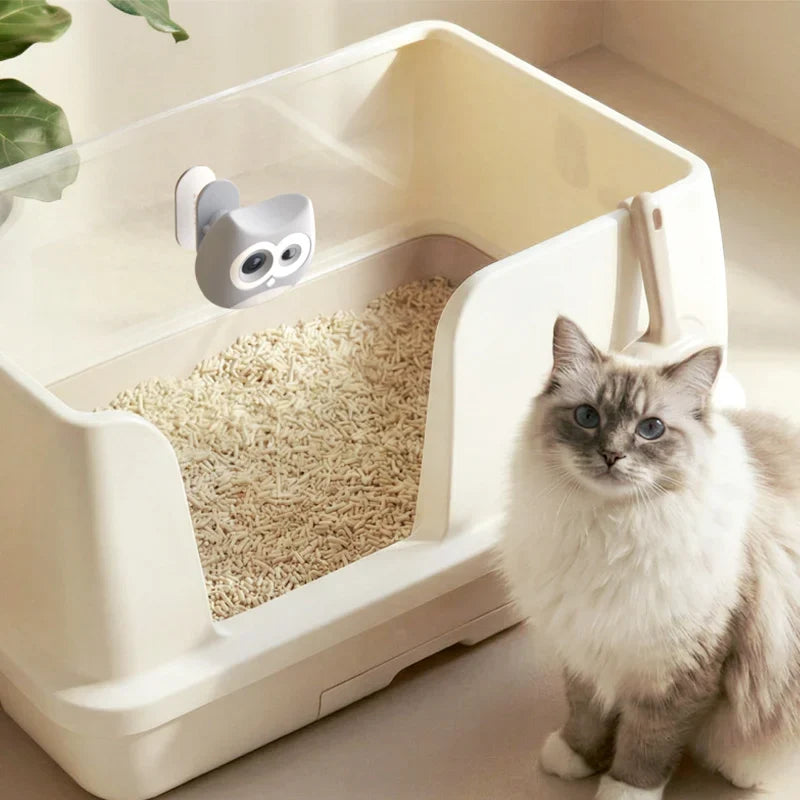
LitterLens can also be added to a compatible litter box already in the home. The cat can keep using a familiar bathroom setup while the owner adds focused monitoring.
Stable Litter-Box View vs. Pan-and-Tilt Room Coverage
Camera movement helps with general room monitoring. Consistent framing helps with litter-box records. That distinction matters when selecting an indoor pet camera for one specific area.
Wyze Cam Pan v3 rotates 360 degrees horizontally and tilts 180 degrees vertically. It can cover a doorway, feeding area, cat bed, and litter box. Two-way audio also lets an owner hear the room and speak through the camera. These features make Wyze a flexible cat camera for home use.
LitterLens keeps the litter area in the same frame. A stable, close-range view can make posture, visit length, repeated entry, and visible stool changes easier to compare over time. Its narrower view also limits the amount of unrelated household activity captured on camera.
Placement still matters. The mount must:
- Keep the litter surface visible
- Leave the entrance clear
- Avoid blocking the cat
- Avoid interfering with rakes, rotating globes, and other moving parts
Depending on the litter box design, SiiPet Adhesive Mount, SiiPet Magnetic Mount, or SiiPet Gooseneck Holder may provide a more secure position and a clearer camera angle.
Not sure whether LitterLens will work with your model? Contact service@siipet.com for installation advice.
Motion Clips vs. Structured Visit Records: Which Requires More Review?
A general indoor pet camera may record people, cleaning, shadows, and routine pet movement. Smart pet detection can reduce unrelated alerts, but it cannot explain the details of a litter-box visit.
With Wyze, the owner may still need to check:
- Which cat entered
- How long the cat stayed
- How many times the cat returned
- If urine or stool was produced
- How the event compares with earlier days
Continuous microSD recording can preserve a broad local video history. Finding one bathroom event may still require searching through the playback timeline.
LitterLens connects the recognized cat, visit time, duration, image, and video within one record. That structure reduces the work involved in finding relevant footage and rebuilding a timeline by hand.
This difference becomes especially useful when a cat makes several short trips during the night. A general camera may save several separate motion events. LitterLens organizes those events around litter-box use, making the pattern easier to review.
Automated results should still be checked when an alert could affect a care decision. Structured records reduce manual work, but they do not make every interpretation final.
Why Does Individual Cat Identification Matter in Homes With Multiple Cats?
For a multi-cat household, an indoor pet camera that only confirms “a pet was there” leaves the most important question unanswered. The owner still needs to know which cat produced the unusual stool or made several short visits.
LitterLens creates individual logs for recognized cats. Owners can compare each cat with its own normal pattern and focus attention on the one showing a change.
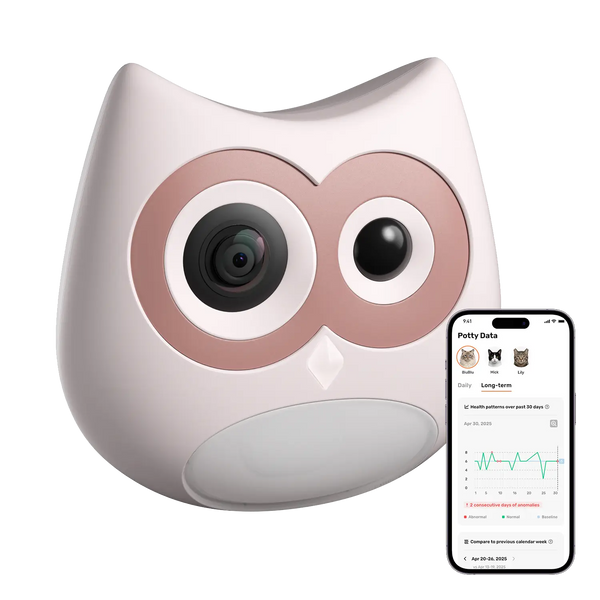
Individual records show which cat used the litter box, how often each cat visits, and how long those visits last. The app presents visit frequency through daily counts for the past seven days, a comparison between this week and last week, and a comparison between this month and last month. These views can make gradual or continuing changes easier to recognize than occasional observation alone. They also help owners connect repeated trips or unusual stool with the correct cat. This is especially useful when several cats share the same box or look similar on video.
Wyze can detect a general pet event through its paid service, but its published features do not include separate litter-box profiles for individual cats. Owners may identify cats by coat pattern, body size, or collar, though this requires additional video review and may be difficult when the cats look alike.
By organizing litter-box activity for each recognized cat, LitterLens gives multi-cat households clearer and more actionable records.

How Do Installation, Power, Storage, and Alerts Compare?
The best indoor pet camera still needs to fit the available space. Outlet access, mounting surfaces, Wi-Fi coverage, storage preferences, and alert types can determine which product works well in daily use.
Installation and Power
LitterLens includes an adhesive mount and can be placed on a suitable flat surface on or near an open, high-sided, enclosed, or compatible automatic litter box. Its 5,000 mAh rechargeable battery supports placement without a permanent cable.
Battery operation can last about one month under typical use. Actual runtime may vary with recording activity and ambient temperature. The device can also operate while charging.
LitterLens connects through 2.4 GHz Wi-Fi and uses Bluetooth during setup. Buyers searching for a wireless pet camera should note that the battery removes the need for continuous wired power, but connected features still require Wi-Fi.
Wyze Cam Pan v3 also uses 2.4 GHz Wi-Fi, but it has no rechargeable battery. It requires a nearby outlet and continuous power through its 6-foot cable. Space must also be left around the camera so it can rotate freely.
Storage and Alerts
Free LitterLens features cover visit logs, stool snapshots, multi-cat recognition, live view, and visit alerts. Local video uses a rolling buffer of about 72 hours. Paid storage extends visit-video access to 30 days and keeps abnormal-event records for up to 360 days.
Wyze supports continuous local recording through a compatible microSD card. Cam Plus adds pet detection, other smart detections, and cloud event storage.
The alert types reflect the purpose of each device. Wyze alerts focus on broader movement, sound, and detected objects. LitterLens alerts focus on litter-box visits and supported abnormal findings.
Who May Prefer Wyze Cam Pan v3?
Wyze Cam Pan v3 may suit owners who need one pet monitor camera to cover a larger indoor space. Its value is strongest when the litter box is only one of several areas being monitored.
Wyze is a practical option when:
- Pan-and-tilt coverage is important
- Two-way audio is useful
- Continuous local recording is a priority
- A nearby power outlet is available
- Manual review of video clips is acceptable
A Wyze camera for cat monitoring can record litter box visits when the box remains in view. Owners will still need to identify the cat and interpret each bathroom event themselves.
Who May Benefit More From LitterLens?
LitterLens is designed for owners whose main priority is organized litter box monitoring. It reduces the work involved in finding relevant clips and connecting changes to the correct cat.
It may be especially useful when:
- Several cats share the home
- Visit frequency and duration need closer monitoring
- Stool snapshots could help document changes
- Important activity happens overnight
- A kitten or senior cat needs closer monitoring as its litter box habits develop or change
- A cat has an existing health condition, especially a gastrointestinal or urinary issue
- A room camera already exists but lacks structured litter box records
- The litter box area has no convenient outlet
- The cat should continue using a familiar, compatible box
- A clearer activity history would help before a veterinary appointment
LitterLens keeps the recognized cat, visit time, duration, images, video, and stool record together. This gives owners a more usable history for daily observation and veterinary discussions.

Choose SiiPet LitterLens for Dedicated Litter Box Monitoring
SiiPet LitterLens is the stronger indoor pet camera when litter box activity is the main concern. It creates individual cat records and organizes bathroom visits into a history that is easier to review.
Wyze Cam Pan v3 remains useful for wider room coverage, two-way audio, and continuous general video. Owners who mainly need structured litter box information will receive more relevant data from LitterLens.
FAQs
Q1. Can a Regular Pet Camera Monitor a Cat Litter Box?
Yes. A regular camera can record the box when the view stays clear. The owner will usually need to find the relevant clips, identify the cat, and compare visits manually.
Q2. Can LitterLens Diagnose a Health Problem?
No. LitterLens records visits and flags supported changes. A veterinarian must determine the cause of straining, frequent visits, stool changes, or other symptoms.
Q3. Is LitterLens Fully Wireless?
LitterLens can operate on its rechargeable battery without a permanent power cable. Connected features still require a 2.4 GHz Wi-Fi network.
Q4. Can I Use LitterLens With an Automatic Litter Box?
Compatibility depends on the available mounting area. The camera needs a secure position, a clear view of the litter surface, unobstructed cat access, and a safe distance from the rake, rotating globe, or other moving parts. Depending on the litter box design, SiiPet Adhesive Mount, SiiPet Magnetic Mount, or SiiPet Gooseneck Holder may provide a more secure position and a clearer camera angle.
Not sure whether LitterLens will fit your model? Contact service@siipet.com for setup advice.
Q5. Do I Need a Subscription for Either Camera?
Both products offer useful functions without a subscription. LitterLens includes core visit tracking and three-day visit-video storage for free. Advanced analysis, instant abnormal alerts, and longer history require a paid plan. Wyze supports local microSD recording, while pet detection and cloud event storage require Cam Plus.


Leave a comment
All comments are moderated before being published.
This site is protected by hCaptcha and the hCaptcha Privacy Policy and Terms of Service apply.