


The key difference is the type of evidence each device prioritizes. SiiPet LitterLens records cat-specific litter box behavior, including visit frequency and duration, video clips of every detected visit, and photos of visible stool. Petivity sits under the litter box and uses sensors to track body weight and classify urination and defecation events. Both can show changes in litter box habits, but LitterLens emphasizes behavioral context and visual stool records, while Petivity emphasizes measured weight and sensor-classified elimination activity. The better choice depends on which type of evidence would fill the larger gap in your home.
SiiPet LitterLens vs. Petivity: Quick Comparison
|
Feature |
SiiPet LitterLens |
Petivity Smart Litter Box Monitor |
|
Litter box visit playback |
Records video clips of every detected litter box visit and saves stool photos; Care+ provides up to 30 days of visit video and associated image history |
Does not provide video or photo records |
|
Monitoring method |
Camera-based visual monitoring |
Sensor platform placed under the litter box |
|
Main records |
Cat identity, visit time and duration, litter box habit trends, video clips of every detected visit, and stool photos |
Cat weight, visit time and duration, and sensor-classified urination and defecation events |
|
Stool monitoring |
Captures visible stool shape, color, and consistency when the camera has a clear view; Care+ can analyze supported stool abnormalities and send alerts |
Records a sensor-classified defecation event but provides no stool photo, video, or abnormal-stool analysis |
|
Weight tracking |
No |
Yes |
|
Urine monitoring |
Records video of every detected litter box visit, so urination behavior or urine may be visible in playback when the camera has a clear view; it does not automatically classify visits as urination or defecation, or photograph or analyze urine |
Uses sensor data to classify urination events but provides no video or photo record |
|
Uses visual AI to organize visits into separate cat profiles; events can be reassigned when needed |
Learns individual weight and behavior patterns with owner labeling; additional confirmations may be requested as a cat’s weight or litter box behavior changes |
|
|
Litter box fit |
Works with many existing litter boxes when the camera has a stable, unobstructed view |
Works best with a compatible box on a smooth, level surface; not recommended for self-cleaning or triangular boxes |
|
Power |
Rechargeable battery or USB-C power |
Power cord or six AA batteries |
|
Price |
$79.99 |
$129.99 |
How Do Camera-Based and Sensor-Based Pet Monitors Collect Data?
Their main difference comes from the source of the data.
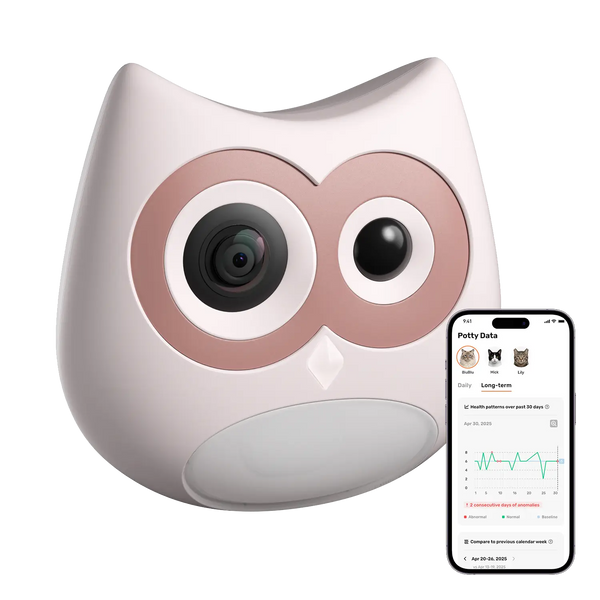
The SiiPet LitterLens litter box camera acts as a visual cat litter box monitor above or beside the box. For every detected visit, it creates an event record that can include the cat’s identity, visit time and duration, a video clip of the litter box visit, and a photo of visible stool when one can be captured clearly.
This visual approach preserves behavioral and physical context that sensor readings alone cannot provide. Owners can review what the cat did during the visit and whether visible stool looked formed, loose, unusually dry, or different in color from the cat’s usual output. With Care+, AI can also analyze supported stool abnormalities and litter box habit trends, then send an alert when a relevant change is detected.
What the record covers: LitterLens records video of every detected litter box visit, including visits involving urination or defecation, and separately captures photos of visible stool. Urination behavior or urine may appear in the visit video when the camera has a clear view, but the system does not automatically classify visits as urination or defecation, or photograph or analyze urine.
The Petivity Smart Litter Box Monitor uses a different signal. Its platform sits under the litter box and measures changes in weight and movement. Algorithms use those signals to identify the cat and classify the visit as urination or defecation. The app then displays weight and elimination trends over time.
Petivity needs an initial learning period. Owners label at least eight events for each cat so the system can connect weight and behavior patterns with the correct profile. Cats with similar weights may require additional labels.
Petivity measures the cat’s weight automatically, so owners do not need to enter or update it manually. Changes in weight or litter box behavior may prompt the app to request additional event confirmations. This distinguishes Petivity’s measured weight records from LitterLens’s visual visit and stool evidence.

What Can Stool Images, Weight, and Elimination Trends Tell You?
LitterLens helps answer two connected questions: “What happened during the visit, and what did the visible stool look like?” It organizes cat identity, visit time, duration, frequency, and video records into a per-cat history. When stool is clearly visible, the device also captures a separate photo that owners can use to compare shape, color, and consistency with the cat’s recent baseline.
The distinction between visit videos and stool photos matters. LitterLens records video clips of every detected litter box visit, whether the cat urinates or defecates. These videos can show visible bathroom behavior, posture, entry and exit, while the stool photos specifically preserve the appearance of visible stool. The system does not automatically identify urination or photograph, measure, or analyze urine.
Care+ can analyze supported stool abnormalities and litter box habit trends, then send alerts that direct the owner to an event worth reviewing. This helps owners focus on relevant records without manually searching through the full history.
Useful comparisons within a cat’s event history include:
- Recent activity: Daily visit frequency across the most recent seven days
- Routine changes: This week compared with last week or this month compared with the previous month
- Visit-level context: Repeated short visits, longer visits, more nighttime activity, or a change in visible posture
- Stool changes: Whether an unusual visible stool appearance occurred once or continued across several events
- Per-cat changes: Which cat’s bathroom behavior or visible stool changed in a multi-cat home
These visual, cat-specific records can also provide more precise context for a veterinarian. Lighting, litter coverage, diet, and camera angle may affect how stool appears, so a photo can document a visible change and when it began without determining its medical cause.
Petivity uses sensor data for a different purpose. It automatically tracks measured weight and classifies visits as urination or defecation, allowing owners to follow changes in weight and classified event frequency. However, it does not provide visit videos, stool photos, or visual analysis of stool abnormalities.
The practical difference is the evidence available for review: LitterLens preserves visible behavior and stool context, while Petivity reports weight and sensor-classified events. Neither product diagnoses the cause of a health change or replaces veterinary care.
Tracking the Right Cat in a Multi-Cat Home
Multi-cat monitoring is where the distinction between visual identity and weight-based identity matters most.
LitterLens uses visual AI to associate litter box visits with individual cat profiles. Once events are organized by cat, owners can review whose visit frequency, timing, duration, bathroom behavior, or visible stool changed.
This visual approach can be particularly helpful when two cats weigh nearly the same because identification is not based primarily on the force measured beneath the litter box. Similar-looking cats, an obstructed face, poor positioning, or limited training data may still produce an uncertain match. Owners can review and reassign an event when needed.
As a cat’s weight or behavior changes, Petivity may return to a brief training period and request additional event confirmations.
For cats with similar weights: LitterLens’s visual identification does not rely primarily on weight, which can make individual visit records easier to separate and review.
Setup, Litter Box Compatibility, and Ongoing Costs
LitterLens adds monitoring without requiring a new litter box. Its included adhesive mount can be positioned on a suitable box or nearby surface. Optional magnetic and gooseneck mounts provide more flexibility for boxes that need a different camera angle.
Before installation, confirm that the camera has:
- A stable view of the main litter area
- An angle that does not obstruct the cat
- Enough clearance from rakes, rotating globes, lids, and other moving parts
Compatibility depends on the litter box design, so unusual, enclosed, or automatic setups are worth checking with SiiPet support before purchase.
One camera monitors one litter area. Homes with several frequently used boxes may need more than one camera, although all connected LitterLens devices can be managed in the same app.
Core features include visit records, litter box habit tracking, multi-cat recognition, stool snapshots, live view, visit alerts, and approximately 72 hours of rolling visit-video history. Care+ adds abnormal stool analysis, abnormal trend analysis, instant abnormal alerts, up to 30 days of visit-video storage, and longer abnormal-event history.
Petivity requires a compatible traditional litter box placed on a stable, level surface, with one monitor recommended per box. It is not recommended for self-cleaning or triangular litter boxes.
For owners who want to keep a familiar litter box and add visual records, LitterLens offers a lower-cost and more flexible setup. Total household cost still depends on how many litter areas need monitoring and whether Care+ history or alerts are needed.

Choose a Pet Monitor Based on the Health Data You Need
Choose based on the information missing from your current routine:
- Choose LitterLens when: You want cat-specific litter box habit trends, video records of every detected visit, visible stool photos, and the option of AI-supported stool and trend alerts. It also lets you keep a litter box your cat already uses and can help separate the records of cats with similar weights.
- Choose Petivity when: Measured weight is the deciding requirement and you use a compatible traditional litter box.
LitterLens is the stronger fit when the missing context is which cat visited, what happened during the visit, and what the visible stool looked like. It creates a reviewable, cat-specific visual history without requiring owners to replace a litter box their cat already accepts.
FAQs
Q1. Does LitterLens Require Wi-Fi?
Yes. LitterLens connects through 2.4 GHz Wi-Fi and uses Bluetooth during setup. A reliable Wi-Fi signal near the litter box helps the app receive visit records, videos, and alerts consistently.
Q2. Can Family Members View the Same LitterLens Records?
Yes. Device Sharing allows the owner to invite up to five family members. Invited caregivers can review the same photos and videos without sharing the primary account password or rebuilding the cat’s history through messages and manual logs.
Q3. What Happens If a Cat Covers the Stool Before a Clear Photo Is Captured?
LitterLens can still retain the cat’s identity, visit time and duration, and visit video. However, the separate stool photo may be unclear or unavailable if litter covers the stool or the camera does not have a clear view.
Q4. Can LitterLens Be Used for Kittens?
Yes. LitterLens does not depend on a stable weight baseline, so it can record kitten visits, visit videos, and visible stool photos. The camera should be mounted securely with a clear view and without obstructing the kitten’s entry or movement.
Q5. Does LitterLens Require Special Cat Litter?
No special or diagnostic litter is required. Because LitterLens works visually, litter coverage, contrast, and camera angle may affect how clearly visible stool appears in a photo.


